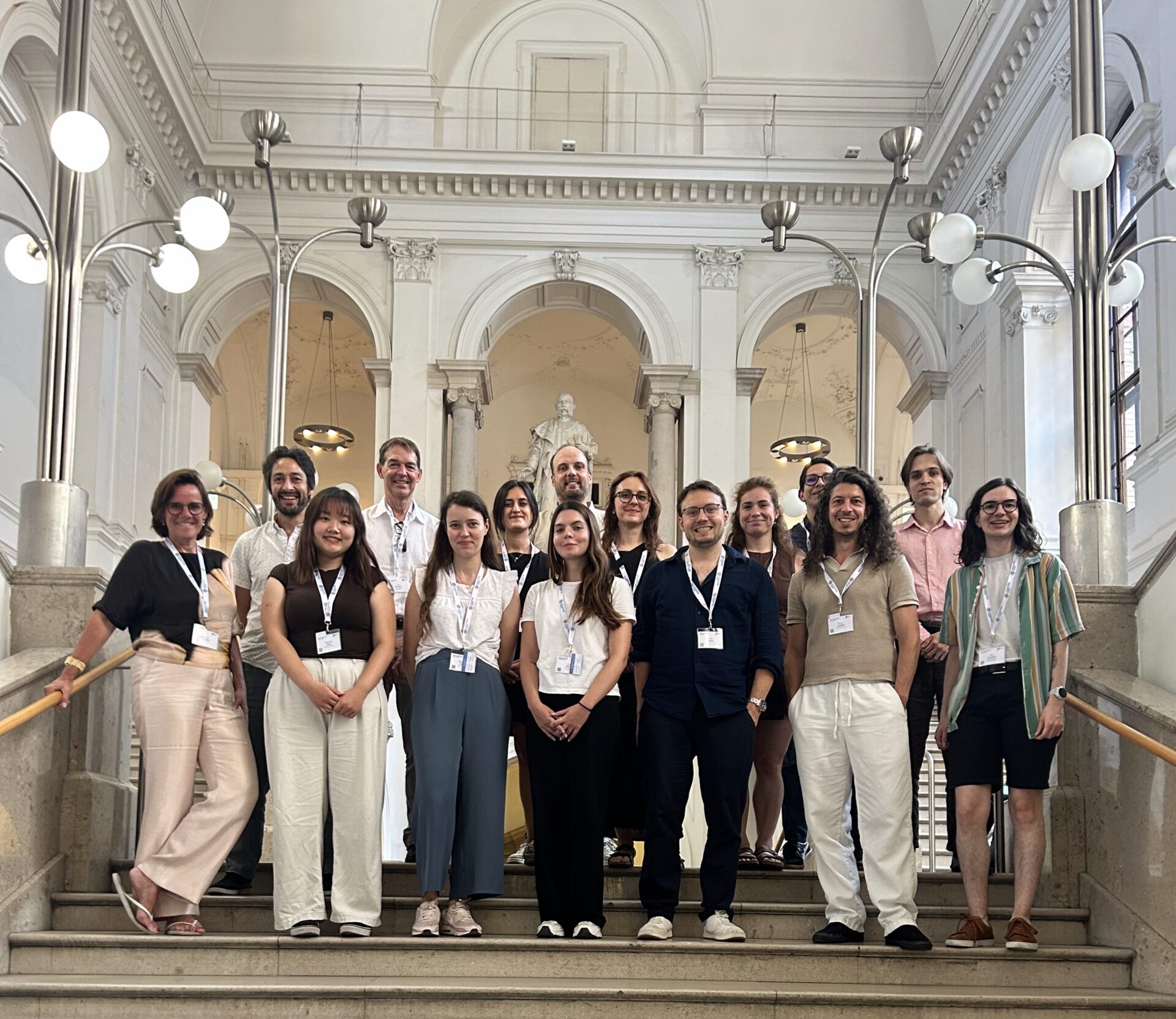
From the 3rd to the 5th of August, during a serious heatwave in Austria, many international scientists in ambulatory assessment gathered in Vienna for the 2026 SAA conference. Our Stress in Action (SiA) consortium was well represented, with 15 members attending and sharing their research. The full list of SiA presenters can be found here.
During this conference, we were excited to hear the field is moving towards multimodal ambulatory assessment. We focus less on Ecological Momentary Assessment (EMA) alone, and we see the use of passive sensing and wearables increasing. The combination of methods like EMA, passive sensing and the use of wearables currently seems like the most complete measurement method in the field of stress and mental health studies.
Stress in daily life
On Tuesday, Prof. Dr. Brenda Penninx opened the day with an inspiring keynote lecture on ‘Stress in daily life’. In this keynote, Penninx showed that digital mental‑health signals that distinguish groups don’t necessarily capture meaningful change within one person. Using data form the RADAR‑MDD study (PHQ‑8, wearables, smartphone sensing), group patterns linked higher depression to poorer sleep, lower activity and altered heart‑rate, and these between‑person differences were predictable. Yet the same models failed to track individual change, because sensor deviations have many possible causes and need context. Also, group‑level associations don’t automatically translate into an advice for individuals. Instead of “diagnosis by wearable,” Penninx argued for personalised, longitudinal monitoring with clear clinical questions, to ensure these measurements and signals truly support better care.
Highlights
Some other highlights during this inspiring conference were the presentation by Magdalena Sikora and Artemis Stefani on the feasibility and user acceptance of the SiA toolkit and the SiA wearable validation pipeline. Additionally Thomas Vaessen and Jannis Kraiss chaired and presented in the symposium on ‘Validating and Optimizing Mechanism Targeted EMIs’. And on the last day we were enlighted by the presentation of Melisa Saygin on speech activity and the cofounding effects on heart rate variability in ambulatory recordings, and Fridtjof Petersen on joint ordinal time-series modelling of momentary affective dynamics and distal health outcomes.
And again, we are very much looking forward to next year’s SAA conference!