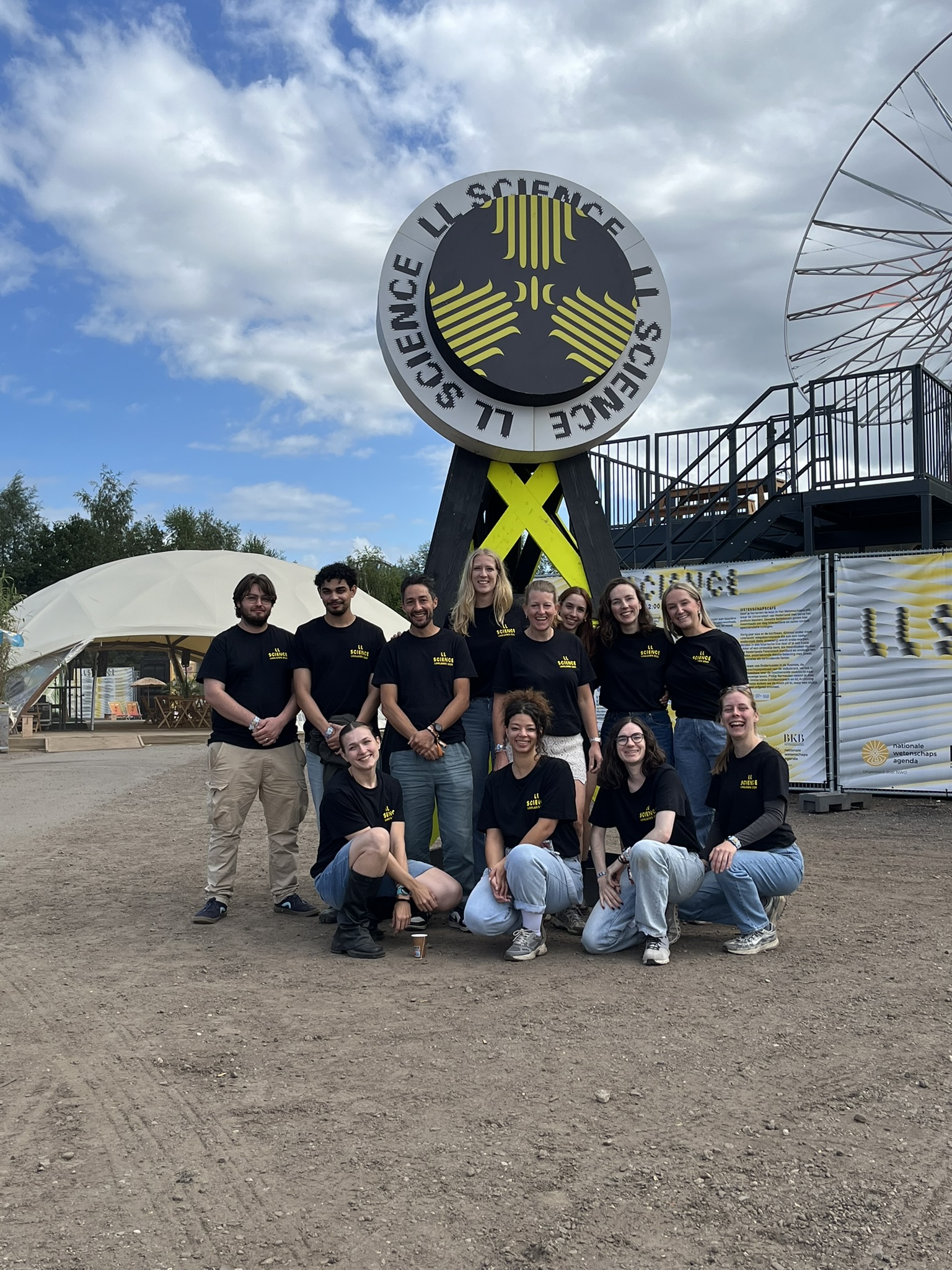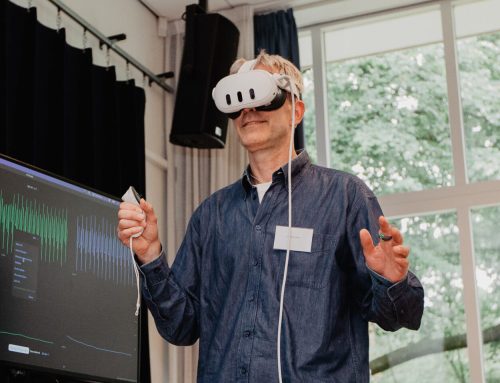
Last weekend, a large team of SiA colleagues was present at Lowlands Science. With the experiment Stress Roulette, the goal was to gain more insight into the temporal dynamics of stress in daily life and learn more about willingness and compliance to stress interventions.
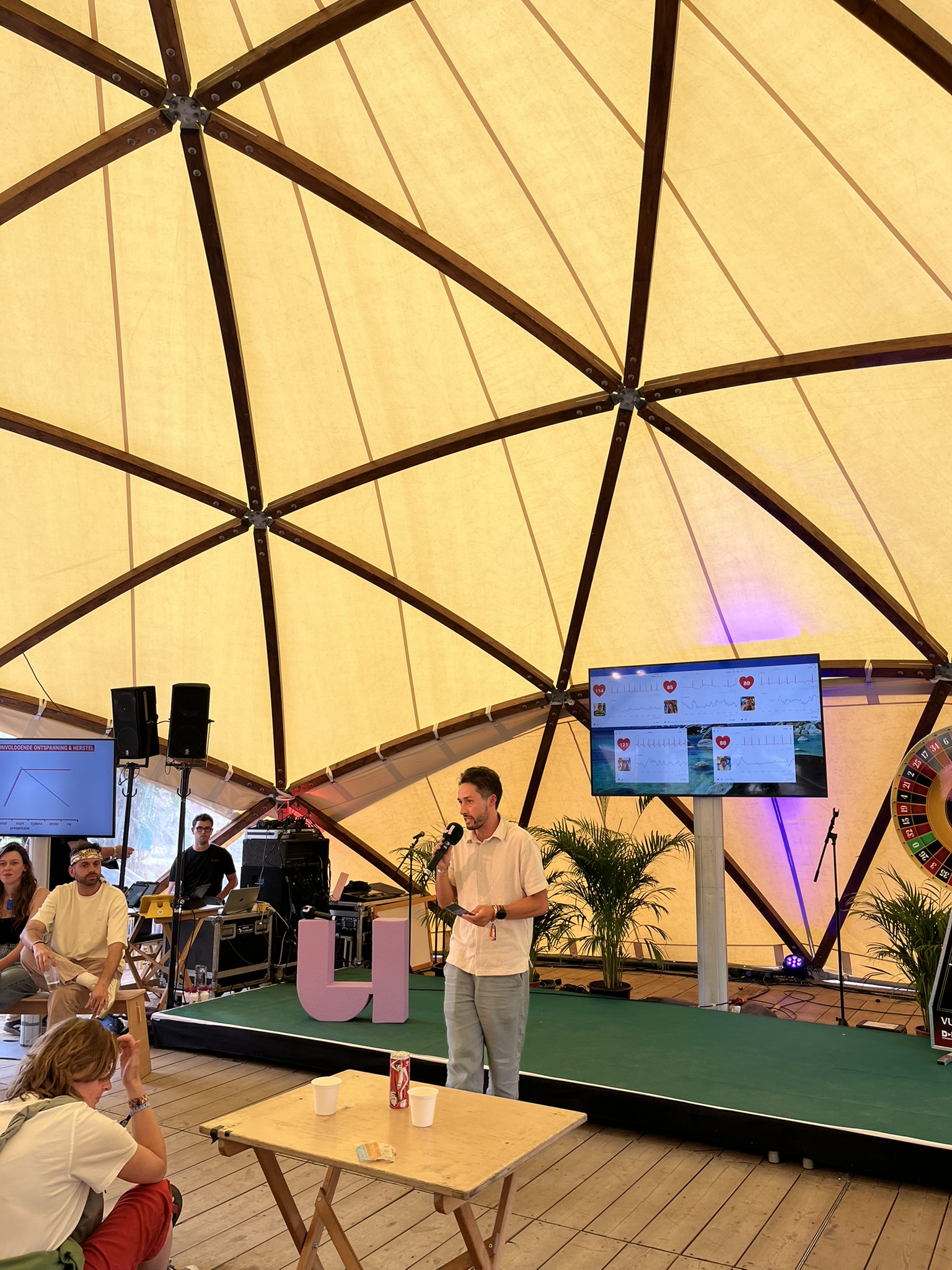
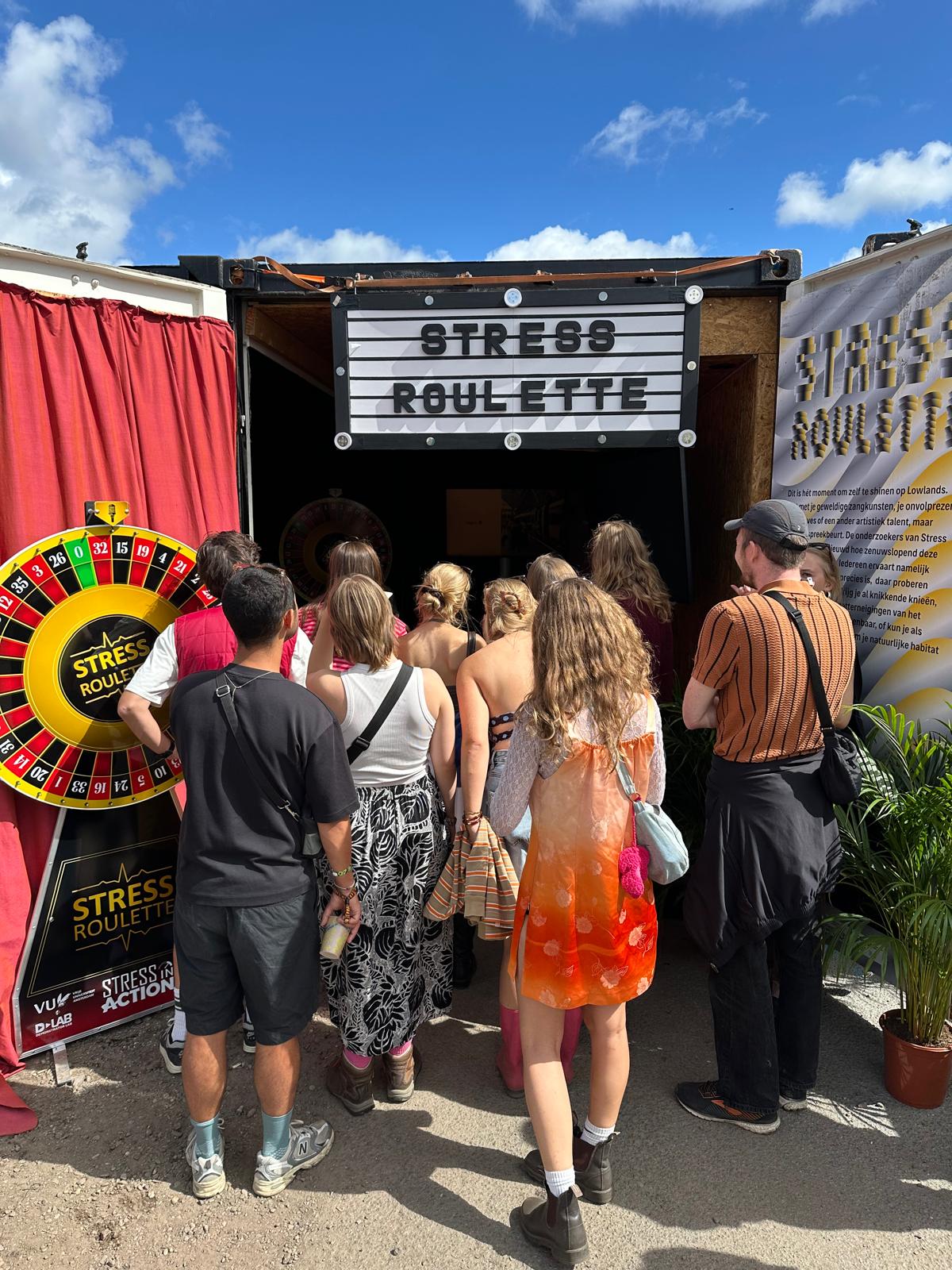
Lowlands Science is a unique opportunity to bring science close to a large audience. Festival visitors can explore 12 scientific studies on the science grounds. From the digital dementia experience to the space maze, and from Snowlands to our very own Stress Roulette. Additionally the Universiteit van Nederland hosted a lecture series, colleague Dr. Martin Gevonden was invited to speak and perform the experiment live for a bigger audience!
Stress Roulette
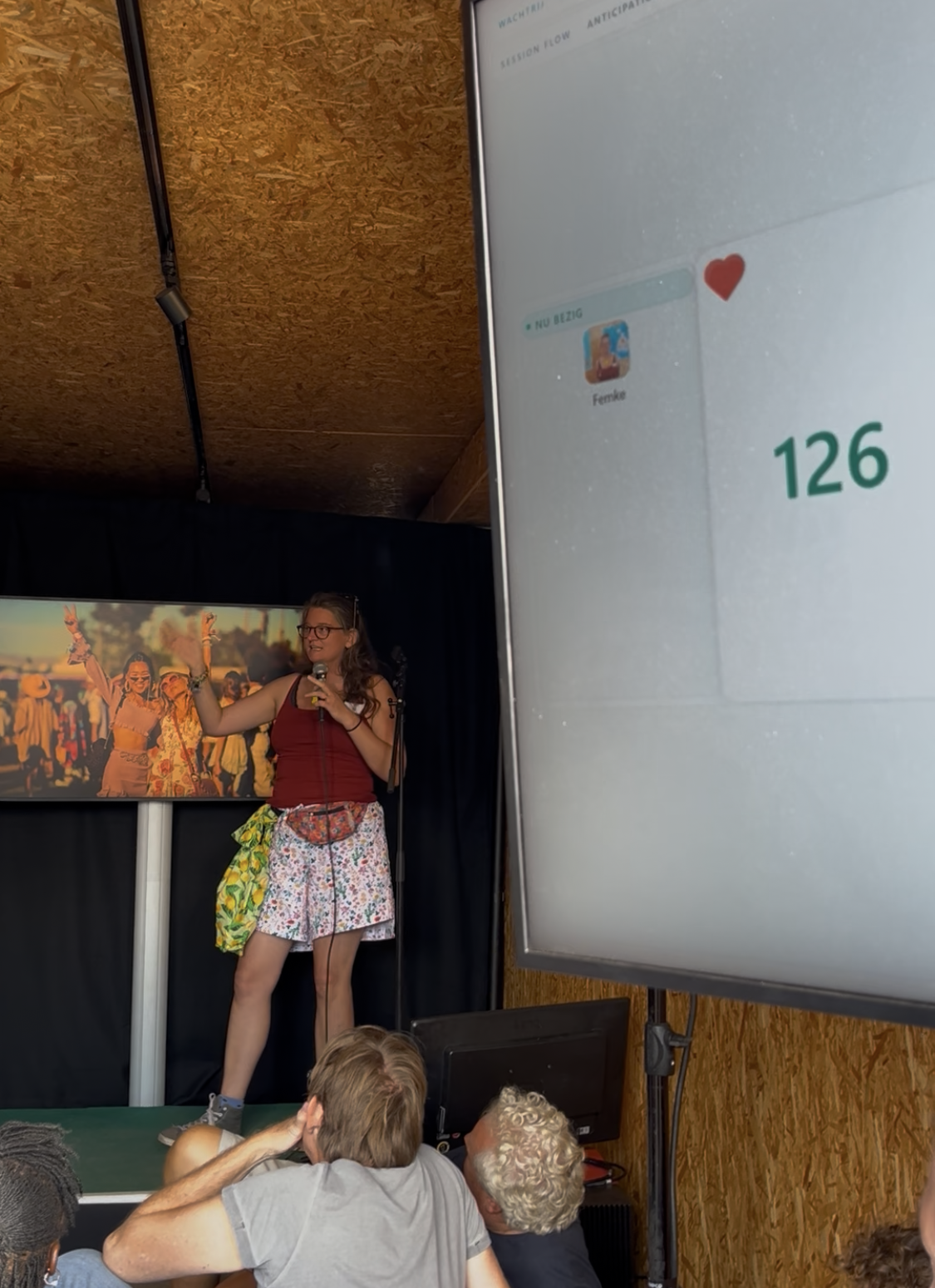
At the Stress Roulette experiment, festivalgoers could take to the stage themselves. The participants had to give a short talk on stage. Before they enter the stage they fill out a short questionnaire, cut some hair for haircortisol analysis and the VU-AMS core device is attached to their chest. The participant waits for 2 minutes in the anticipation stage. Then they go on stage, spin the roulette wheel which determines the topic they will present, and the slides appear on screen. The topic is completely random, they’ve never seen it before and the presentation will last 2 minutes. Afterwards they go into the recovery room for 2 minutes and then they’re done!
This experiment demonstrates the process of stress over time. We have measured stress before the talk (anticipation), during the talk (reactivity), and afterwards (recovery). We investigate how stress develops over time and study the body’s physiological response throughout this process. This is done using the VU-AMS Core, this wearable device was streaming the participants’ heart rate and breathing live on screen, allowing the audience to watch live what is happening inside the body. In addition, we assessed personal characteristics and stress levels with a short questionnaire, and we have analysed stress over a longer period using hair cortisol.
During the festival, we were able to collect data from more than 150 festival-goers. The participants were enthusiastic about having the opportunity to be on stage themselves and give a presentation to friends and other festival-goers. We involved both the participants and the audience in our experiment, were able to share more about our research, and could inform them about the development of stress and stress interventions. A wonderful opportunity to truly bring science closer to a large audience!
The team
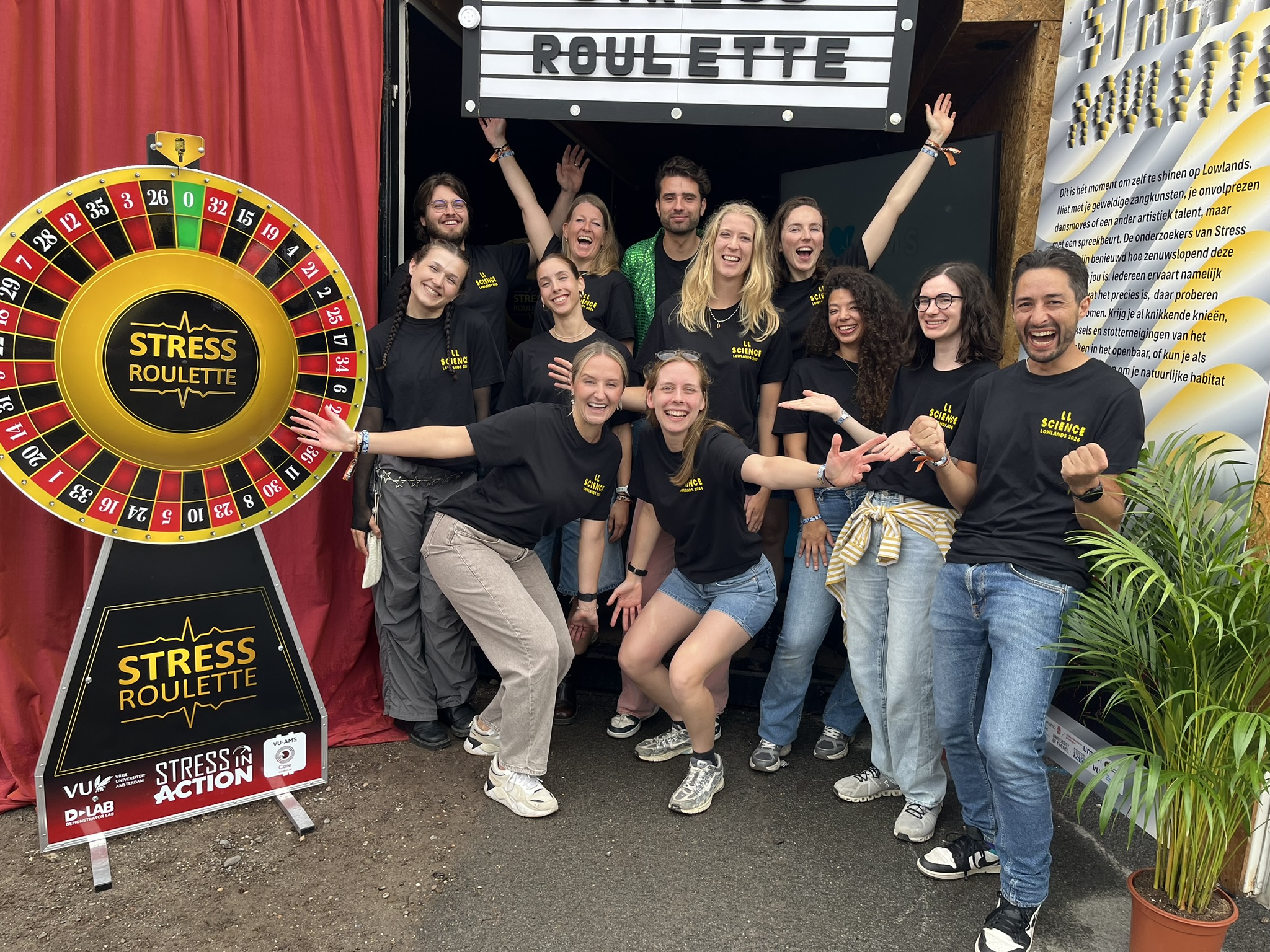
The team of SiA colleagues at Lowlands Science was led by assistant professor Martin Gevonden (VU Amsterdam) and communications officer Anouk Weverling (Amsterdam UMC). The main research question for the experiment stems from the research of PhD candidate Ellen Stroemer (UMCG), who studies the temporal dynamics of stress in daily life. The associated study on stress interventions is led by PhD candidate Kiera Drake (University of Groningen). Furthermore, we were extremely pleased with the contribution of Alec Zirnheld (UMCG), who helped to map out contextual factors. In addition, Robin Lengton and Joëlle Oosterman (both postdocs at Erasmus MC) brought a wealth of knowledge about hair cortisol and their experience of conducting research at other festivals. Many thanks also to Myrte Schoenmakers (VU Amsterdam) for optimising the workflow with the VU-AMS systems. Research officer Lauraine Eekels and research assistant Sabine Paulus (both VU Amsterdam) were a tremendous support in this project thanks to their experience with informing participants on the study and the use of the VU-AMS. And thanks to friend of the team Nik Goedemans for entertaining the crowd in between presentation. And last but not least, the technical support of the VU-AMS by Berk de Rooij and Nizar Amine was invaluable!
Exposure
LL Science is a unique opportunity for research. In addition to it being very important and enjoyable to inform the participants and audience about our science, there is also a lot of media present at LL Science. Below are a few examples of Stress Roulette in the media: