In November 2025, this paper by Melisa Saygin and colleagues was published in Biological Psychology. The paper is about their study on controlling heart rate variability for respiratory effects in ambulatory measurements of psychophysiology.
Background
When we are stressed, the nerves that prepare our body for action (the “fight-or-flight” system) become more active in the heart, while the nerves that help us relax and recover (the “rest-and-digest” system) become less active. This drop in “rest-and-digest” activity is called vagal withdrawal, and it leads to less variation in our heartbeats from one moment to the next—a measure known as heart rate variability (HRV). If someone has low HRV for a long time, or their HRV doesn’t change much in response to stress, they are at higher risk for cardiometabolic and psychiatric disease.
To study how the “rest-and-digest” system affects the heart in daily life, researchers often use wearable devices to track HRV, especially the type of HRV linked to breathing, called “respiratory sinus arrhythmia” (RSA). However, RSA can be affected by how fast or deeply someone breathes, not just by changes in the “rest-and-digest” system. For example, breathing slower or deeper can increase RSA even if the nerves themselves aren’t more active. So far, no studies have compared different ways to account for the effects of breathing on RSA.
The study
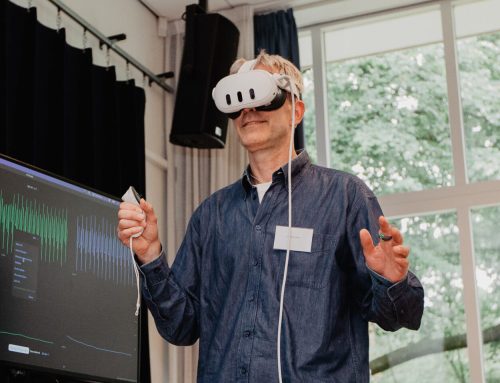
In this daily life study, people wore a special device (impedance cardiogram) that measured their heart and breathing signals as they went about their daily lives. They also answered questions every hour about how they were feeling (EMA). The researchers tested different ways to adjust the RSA to account for how people were breathing. They found that adjusting RSA based on the amount of air a person breathes in and out (tidal volume)(specifically, dividing RSA by tidal volume) worked best. This method explained much more of the changes in heart rhythm that happen when people are resting or not very active. These are the periods when the “rest-and-digest” nerves have the most influence on the heart.
The study also found that when RSA was not adjusted for breathing, it was linked to how safe people felt at that moment. However, when RSA was adjusted for breathing, this link disappeared.
Relation of RSA and mental health
Scientists often study how RSA relates to our mental states. This helps them develop ways to support mental health and understand how our bodies respond to stress. In this study, the connection between uncontrolled-RSA and feeling safe was actually driven by people breathing faster when they felt less safe. If researchers use uncontrolled-RSA, they might deduce spurious links between mental states and breathing.