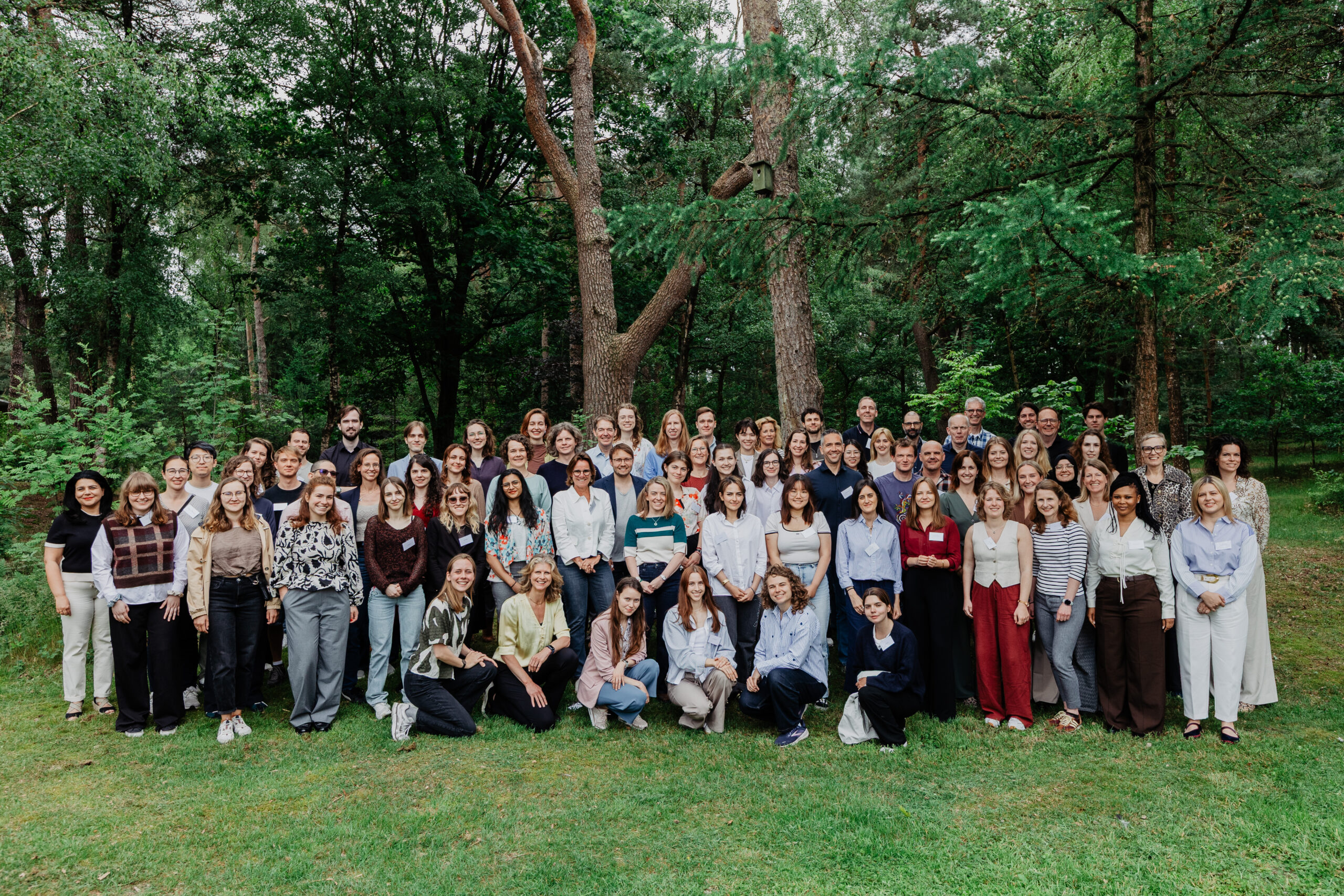
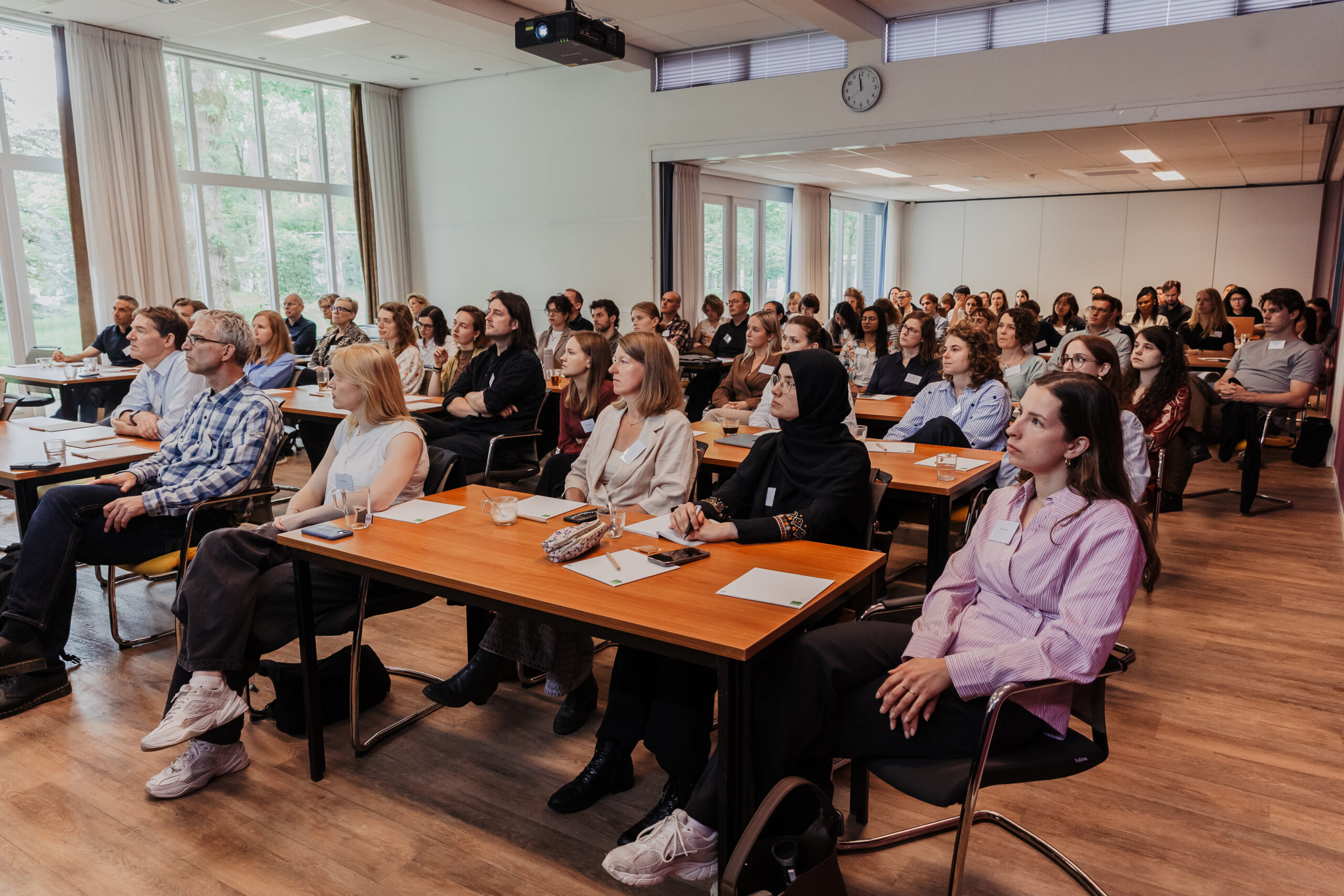
On the 8th and 9th of June 2026, more than 80 consortium members of Stress in Action gathered in the woods of Leusderheide, centrally in the Netherlands. Our fourth annual two-day meeting was held at the International School for Philosophy (Internatinale School voor Wijsbegeerte, ISVW).
During this meeting we welcomed new and established members of our consortium, and we were delighted to host our international guest Dr. Olga Perski, from Stockholm University.
On Monday, PI Brenda Penninx started the meeting with a brief introduction and official welcome to all attendees. The three research themes and the data analysis support core (DASC) shared their progress and presented their plans for phase 2 of the project. RT1, presented by Bertus Jeronimus, is currently working on daily stress theories, temporal dynamics of stress and increases their focus on interventions. Eco de Geus presented RT2’s feasibility and validation studies currently ongoing, and the vision for the data collection in the cohort enrichment using the toolkit version 1.0. Liesbeth van Rossum presented the ongoing pilot studies for RT3. Laura Bringmann presented the goal for DASC for phase 2. That is to integrate advances in Natural Language Processsing (NLP) and Large Language Models (LLMs) to analyse qualitative Experience Sampling Method (ESM) data at scale.
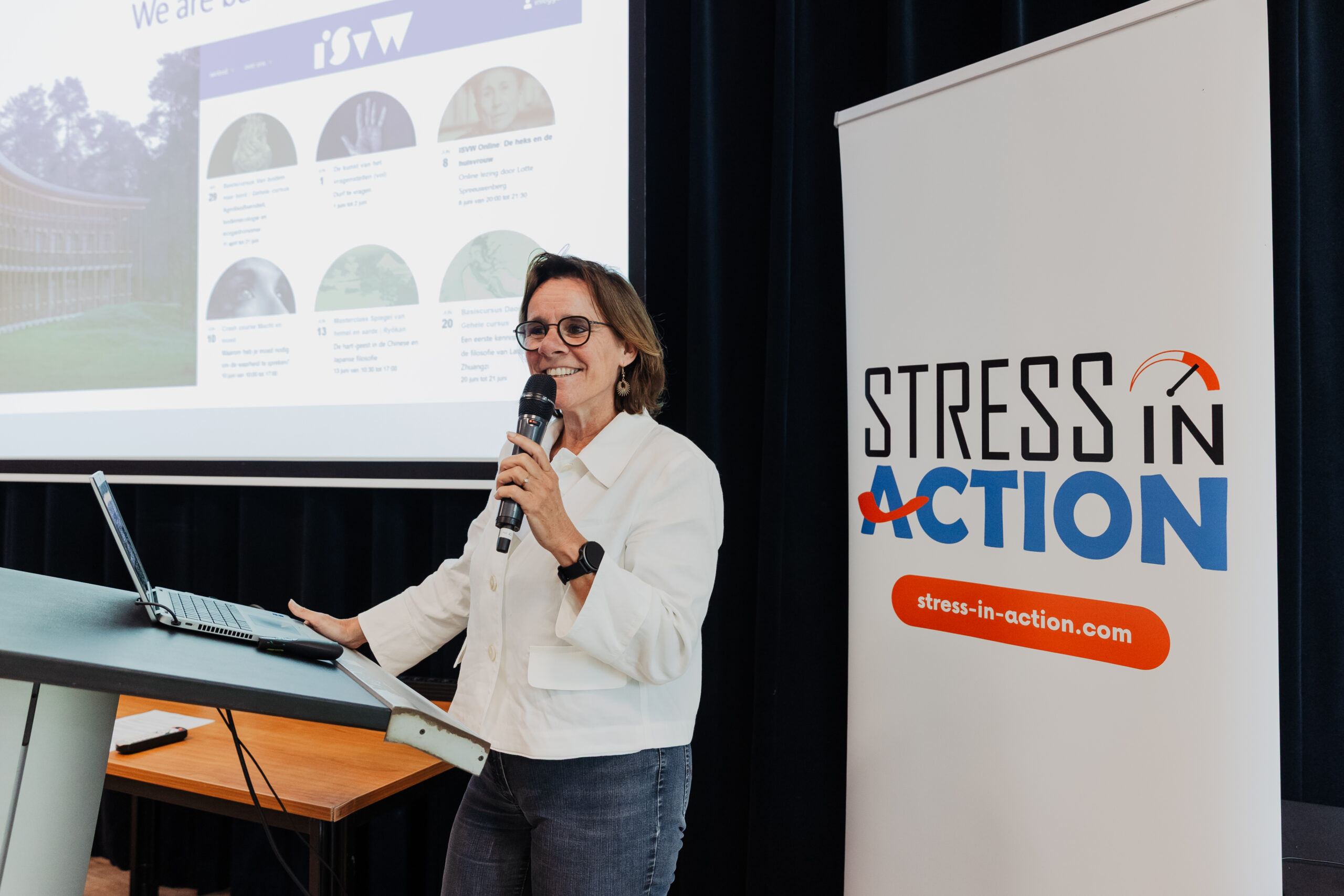
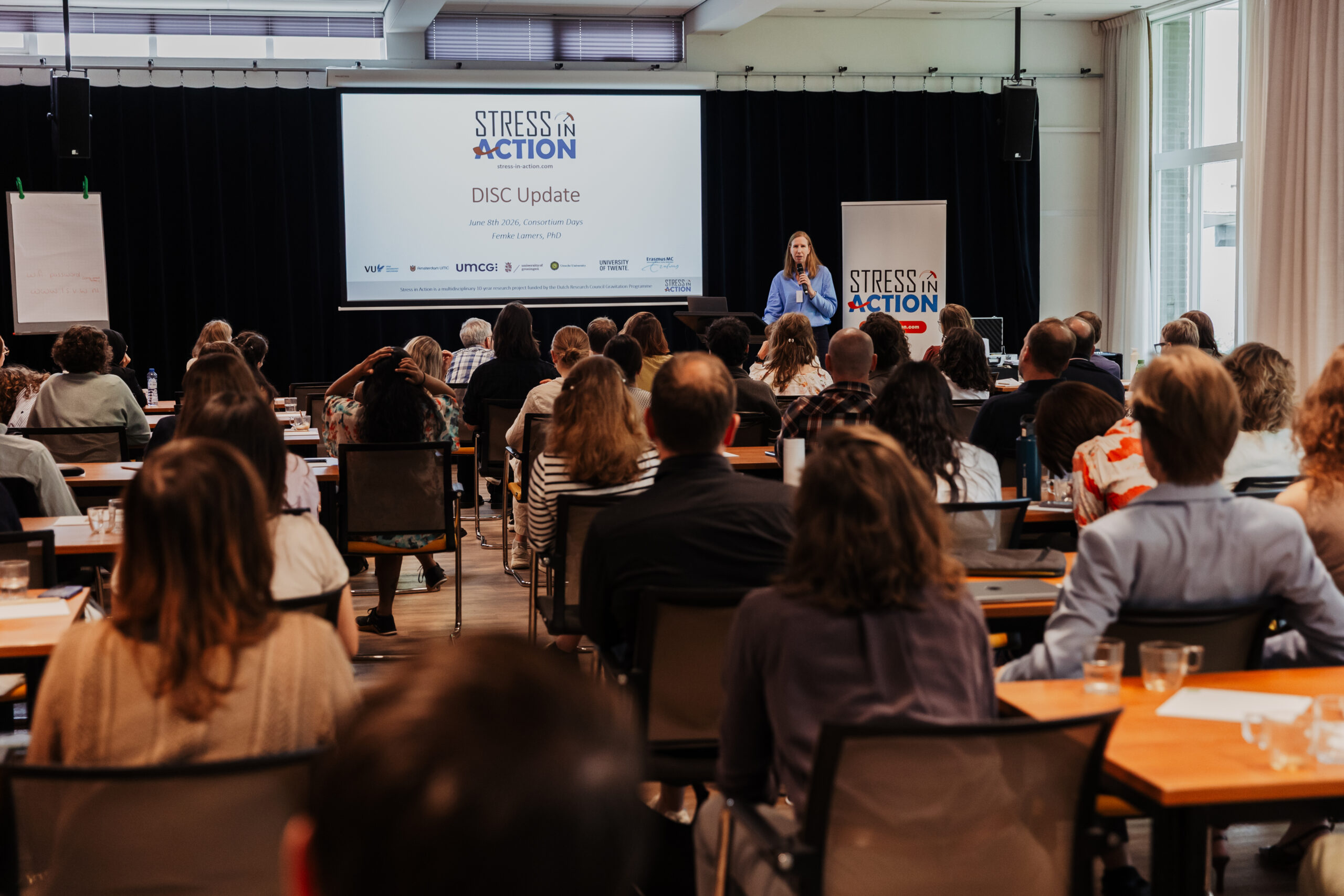
In the afternoon we continued with an elaborate overview of the data infrastructure support core (DISC), by Femke Lamers. DISC is providing a central coordinating hub for data collection, data management, and data delivery processes within Stress in Action. This is of utmost importance in SiA’s cohort enrichment activities in phase 2.
After a full day of social interactions and science talks, we closed the day with a lovely dinner at the hotel restaurant and a social activity organised by the Project Office.
Just in Time Adaptive Interventions
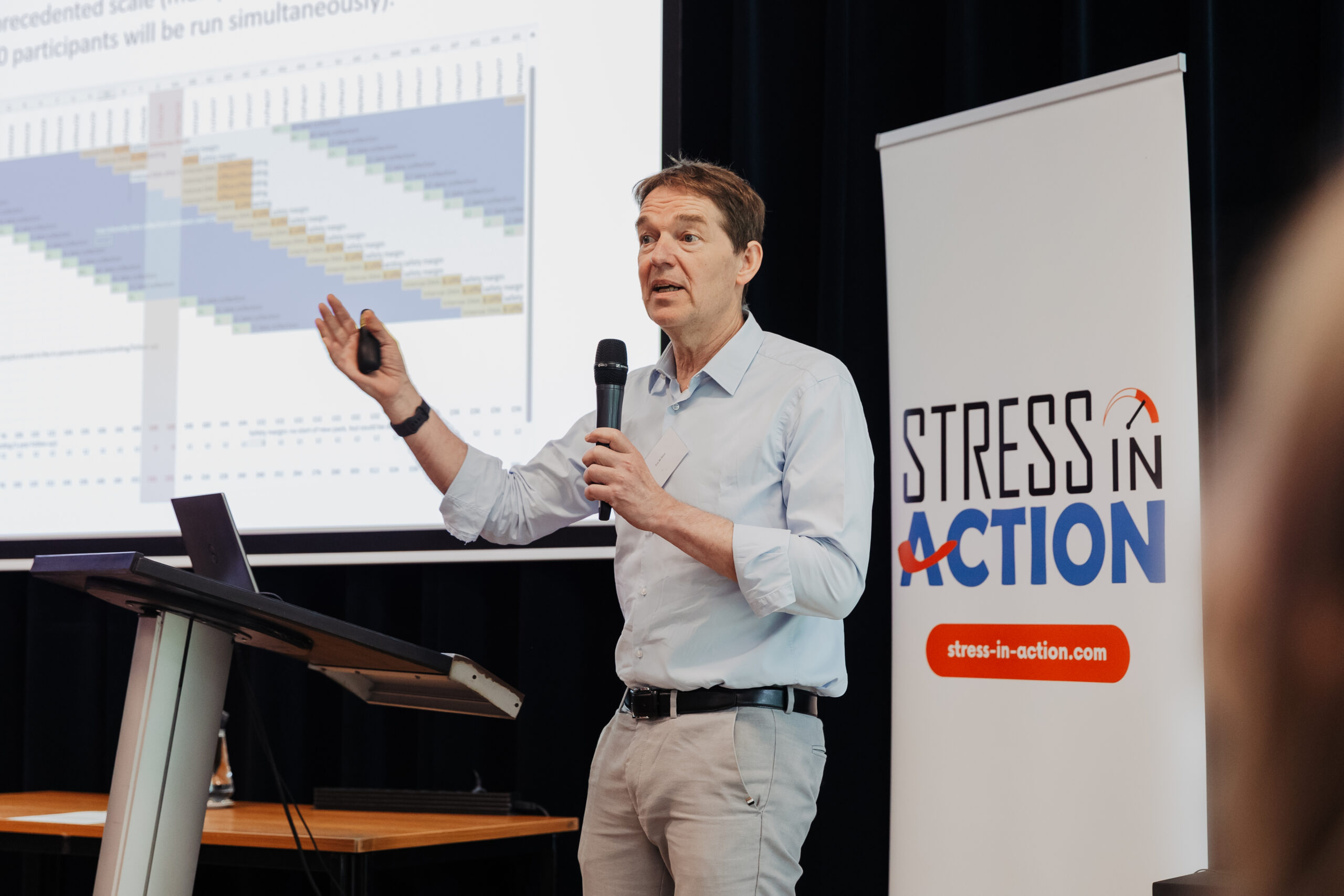
The second day, Tuesday, was chaired by Monique Tabak and Matthijs Noordzij and was all about just in time adaptive interventions (JITAIs). The topic was introduced by guest speaker Dr. Olga Perski. Her talk was a great introduction to JITAIs for our consortium. Perski told us all about receptivity of JITAIs and predictive modeling.
Additionally, our experts Jannis Kraiss, Thomas Vaessen, and Bertus Jeronimus, taught us more about JITAIs in stress and psychopathology, by presenting their work. E.g. Kraiss presented on his ERC grant project on using JITAIs in patients with bipolar disorder, and Vaessen presented his study on the evidence of efficacy of JITAIs for stress regulation. In the afternoon Olga Perski, Monique Tabak, and Matthijs Noordzij took the consortium further down the JITAI road in an interactive workshop: ‘Start building your own JITAI’.
Furthermore, 12 PhD students pitched their work in a 5-minute data flash talk. These flash talks were a great opportunity for the junior researchers to present their work, interact with the data, and answer questions to their studies.
After two interesting days of science, networking and socialising, we closed the meeting with some drinks and said goodbye to the woods of Leusderheide.
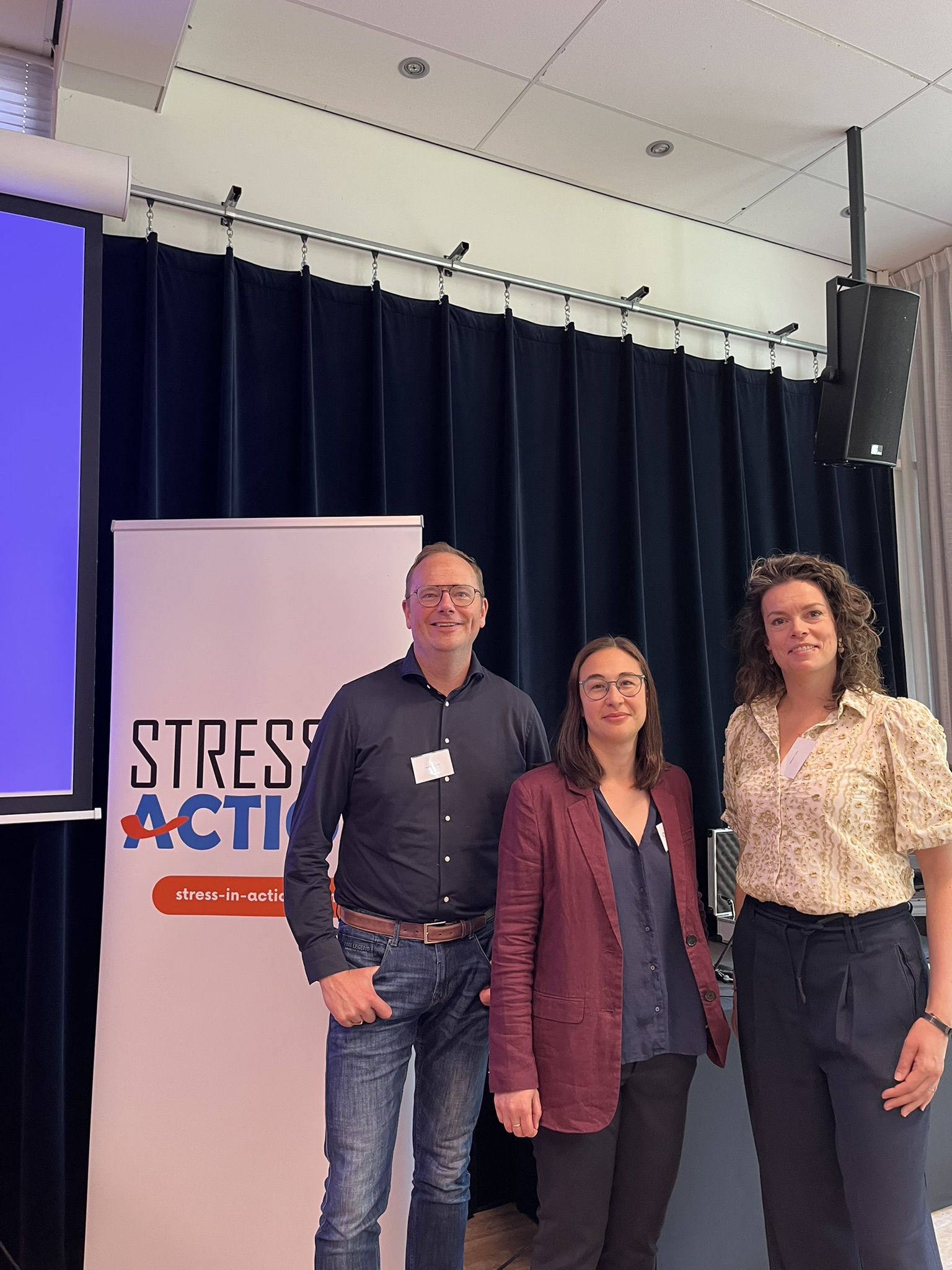
Matthijs Noordzij, Olga Perski & Monique Tabak